Ongoing Notes
Small Web Potluck 2026 - Pineapple Cobbler
in 2022, I considered stocking up on canned goods because I wasn't spending all my SNAP benefits per month. this idea came to me in part because my big project at the time was about the zombie apocalypse. I registered pretty quickly that being a prepper based on my own fiction writing is dumb, but I still added some canned chicken noodle soup to my online order one afternoon without any plans to make it for dinner. apparently, an unknown part caught wind of my intentions to hoard canned foods and decided to add something to the cart without me noticing before I hit the order button—a bunch of canned pineapple.
the thing is, I don't like pineapple. I took these 64 oz of canned pineapple chunks with me through two moves anyway, first because I didn't have the executive functioning required to donate them, and then because my girlfriend insisted we'd find a use for them one day. well, the theme of the Small Web Potluck for 2026 is the color yellow, so this is finally that day. here is the pineapple cobbler recipe I used. I'll list the ingredients here, but this page will not contain actual instructions because re-writing someone else's recipe in my own words without making any notable changes to it is boring as hell.
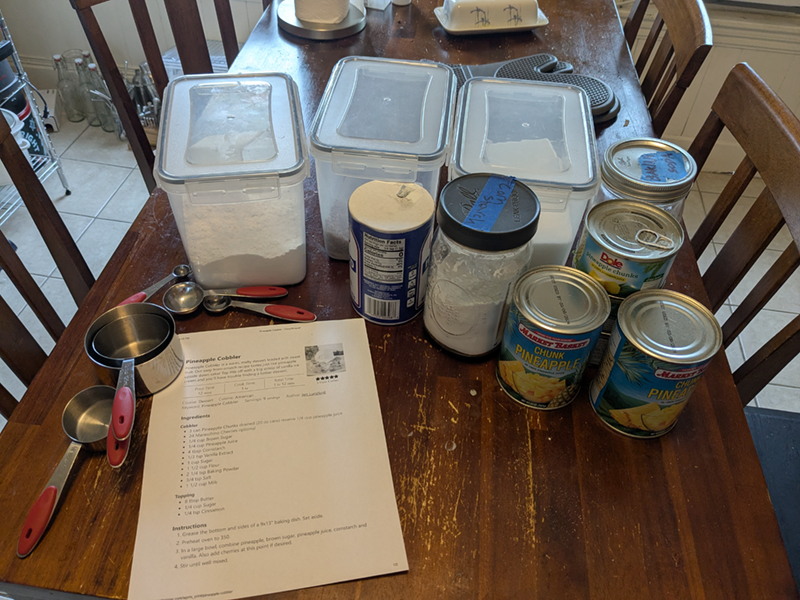
you will need this for the cobbler:
- 3 20 oz canned pineapple chunks (save 1/4 cup of juice from one of the cans)
- 1/4 cup brown sugar
- 1/4 cup pineapple juice (saved from can, referenced above)
- 4 tbsp cornstarch
- 1/3 tsp vanilla extract
- 1 cup sugar
- 1 and 1/2 cup flour
- 2 and 1/4 tsp baking powder
- 1 and 1/2 cup milk
and this for the topping:
- 8 tbsp butter
- 1/4 cup sugar
- 1/4 tsp cinnamon
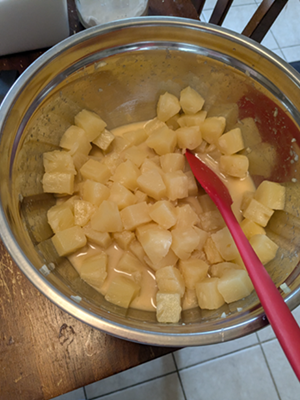
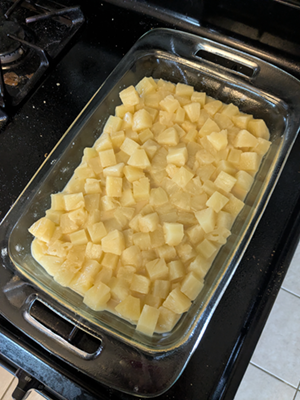
so, why don't I like pineapple? I actually enjoy the *taste* of pineapple quite a bit, so I have no problem with something that has pineapple juice or flavoring in it. what I don't like about pineapple is the texture, especially when it's baked into something. I really do not like baked fruit and I really, really do not like baked fruit when it's inside of a dessert with a different texture. I have always had a thing about what contrasting textures are okay to combine and what skeeve me out, and if I bite into a cake to find that there's baked fruit inside, I will not be happy. this is an ARFID problem, though I've made some decent progress on that front lately. my fun food from the week before last as of making this dish was an apple cake. did I enjoy it? yes! did I grimace each time I stumbled upon an apple slice within the otherwise light, fluffy cake? also yes!
when I first unwittingly acquired all these canned pineapples, I lived alone and there was really no solution to the problem besides donating them. now, I live with my girlfriend, who loves pineapples and has two additional girlfriends who will also happily eat pineapple cobbler. I knew that it was going to be this dish the second I saw it on a list of canned pineapple recipes, but I still let my girlfriend check out the list herself to see if there was anything else she wanted more. it turns out that, if you look up "canned pineapple chunk recipes" and click on something that has an entire list of ideas, a large amount of those recipes are going to be retro and/or Southern dishes. I adore those kinds of recipes, even though I probably wouldn't eat them myself. unfortuntely, you couldn't pay my girlfriend to eat an Ambrosia Salad, but maybe I'll make one for church at some point.
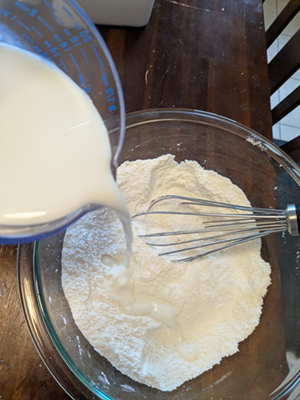
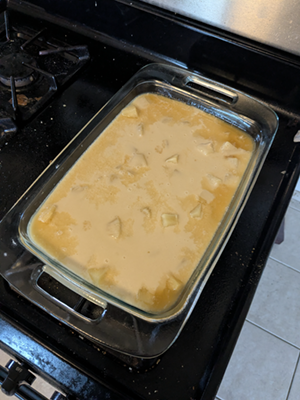
I figured out almost immediately upon actually starting the recipe that I grabbed some of the wrong ingredients and/or left some ingredients in the cabinet completely, but good god I did not want to retake any pictures. there are almost no photographs of anything on this website because I hate taking pictures with my phone. my hands are shaky and I am convinced that my phone camera is inherently low quality; whether that has any basis in reality is up for debate. I feel especially self-conscious about my kitchen with its strange organization and less-than-spotless surfaces. the logical part of my brain tells me that I live in a normal-looking apartment, an apartment that might not always be the tidiest but is clean enough nonetheless, while the part of my brain still trapped in a suburban hell looks at the stovetop pictures and sees those weird TikToks where someone makes a repulsive meal in the dirtiest environment you can imagine. there are certain things where I'll just believe it's inherently not as good as others' because I'm the one that made it, regardless of whether I can explain anything materially wrong about it or not.
thankfully, the food I make is generally not one of those things. back when I was living alone, genuinely thinking that becoming a bit of a prepper would be a good way to manage my mental health, I could not cook. I didn't understand how to season things, I read recipes too slowly, any amount of pushback or problem-solving made me collapse for weeks on end. there were times where I accidentally dropped my food on the floor and decided to simply not make myself another dinner because of how stressful it was. recover is a slow process, but the landmark that is the accidentally purchased 64 oz of canned pineapple chunks is one of the many things that reminds me of how far I've come. in 2022, simply crawling out of my hole enough to make salmon instead of pasta with butter or the same chicken recipe for dinner one night was a massive challenge. in 2026, I can see a virtual potluck event, immediately find a recipe for it, and make it the next afternoon without even a moment of hesitation. I didn't need to plan my day around it or psych myself up for a fight against my executive dysfunctioning. I wanted to make something, so I made something.
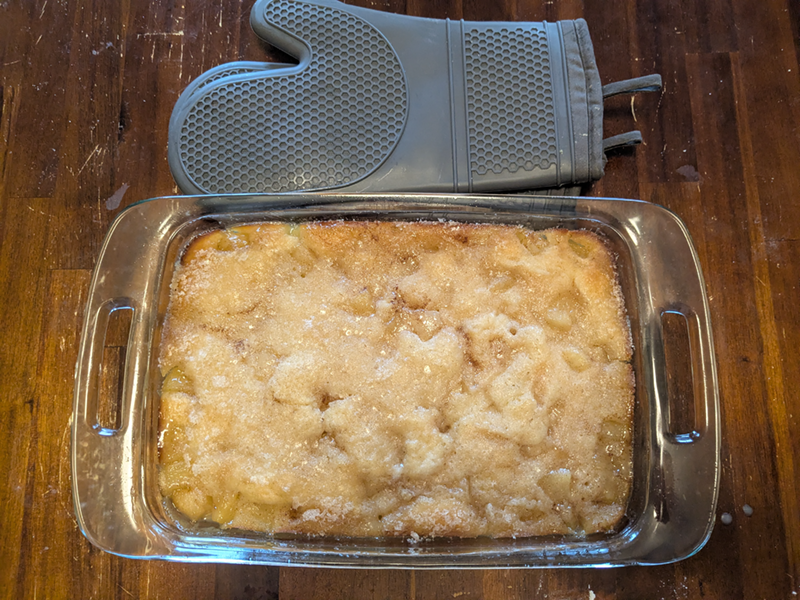
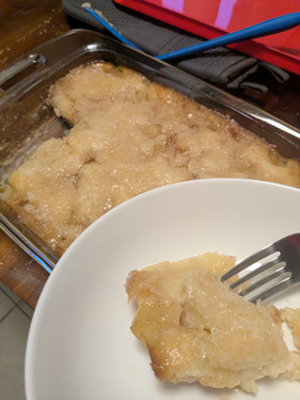
I ended up trying two pieces of the cobbler, one right after it had mostly cooled and one after it'd been in the fridge overnight. my girlfriend agrees that pineapple cobbler has to be cold to be enjoyed, because as she put it when she tried it warm, "it's kind of like apple cobbler, but less good." in my first attempt to try it, I just ate the top part, which defeats the purpose of the dish. in my second attempt, I told myself not to be a coward and ate everything together. it was yummy and would probably taste even better with a bit of homemade whipped cream, though my feelings on the texture of pineapple did not change—as expected. the important thing though is that I didn't gag. there are very few textures that make me gag anymore, and that's a huge feat, especially when the treatment for that side of ARFID has been inaccessible to me for years. I got to this point because I was given the security I needed to rely on my creativity and desire to learn for healing, not a specialist that would decline working with someone who has a more complicated trauma history than negative experiences with food.
I love cooking for other people far more than I love cooking for myself. I can branch out with recipes I know I probably won't like and still get the chance to try it without worrying that making it will take away energy that could've been spent making a safe food. in return, I get the reward of my loved ones and my community enjoying something I made. I often view my church as my community, but in a way, the indie web is my community too. part of my recovery from online mobbing involved discrediting the existence of a virtual "space" beyond words on a screen, though I think it's a little more nuanced than that on the indie web. there is far more community in a collection of personal, hand-coded websites than there is in a tag on Tumblr. I see a real world presence when I look at a recipe prepared by the webmaster on a website that they made themselves. maybe the internet isn't a material place that I can really exist in, but this part of it is where I belong.
How to Tell if an Online Recipe Is Bullshitting You
websites like Allrecipes are full of dishes where the author took someone else's photograph, whether that be a stock photo or real cook's, and basically improvised the recipe. recipes on Betty Crocker's website mainly exist as a way to advertise their products and were never tested. if you've ever followed a recipe perfectly and had the results look absolutely nothing like the picture, that's probably why. this has been happening long before generative AI was a thing and you can fall victim to it regardless of how good you are at spotting AI recipes/images. so, how can you know when something's bullshitting you before you waste your ingredients and feel disappointed by the results?
I've realized that, while the massive wall of text before a recipe card is shown is annoying, it's actually really important in determining whether the recipe is legitimate or not. a recipe that has multiple photos beyond the preview image and shows pictures for every step of the instructions is likely a recipe that works. these recipes are going to be on someone's personal cooking blog or the site of a small independent business. if it's on a website where anyone can submit recipes, an inexperienced cook has almost no way of knowing that it won't work until it doesn't. if it's on a website for a big company, the point of the recipe is to get you to buy their specific brand of flour or whatever and they don't actually give a shit about whether it works or not.
sometimes, a recipe isn't complete bullshit but still doesn't come out the way you thought it would. if you got it from one of the more legit sources I mentioned above, it's important to take into account that it's written by someone that has a lot of cooking experience and often doesn't consider people that don't have any intuitive understanding of cooking. they assume that you have all ingredients measured out in advance, so if you overcook something on the stove because you were measuring out ingredients while it was already hot in the pan, that's why. they have very sharp knives and know how to chop vegetables with a lot of precision, quickly. they know to spoon and level ingredients like flour rather than scooping with the measuring cup directly, even when they don't tell you to spoon and level it (you should always do that btw). they know what role every ingredient plays in their recipes, so they know how to correct it when they've accidentally used too much of one or not enough of another without measurements or additional instructions.
there is also a chance that they did take an inexperienced cook into account, but those kinds of instructions are usually the section with step-by-step pictures... yes, right below where they talked about where they were during 9/11. it's important to remember that a real person wrote these recipes, even if the stories they tell above them aren't always relevant or exist mostly to create ad space. at the end of the day, the best way to avoid a bullshit recipe is to confirm that someone wrote it based on food they've actually made for their loved ones and read the instructions the way they intended for them to be read.
two videos I recommend if you want to understand why recipes online are Like That are i actually read the essay before the recipe, here's why by Answer in Progress and Debunking Pine Needle Soda, a Medical SCAM & flat cookie hacks by How To Cook That (just the first half of the video).